
Sandwich Generation
The Sandwich Generation
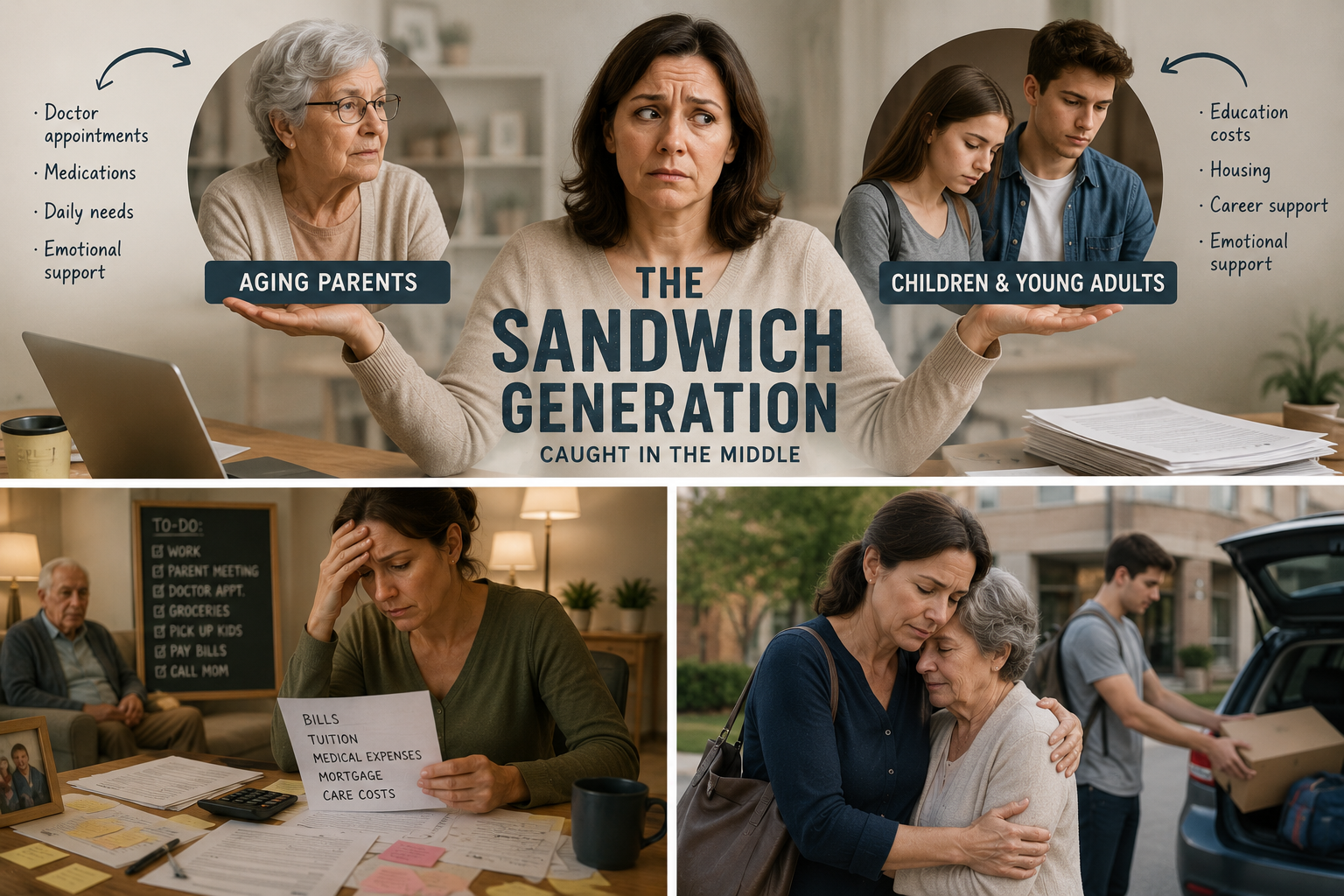
The Sandwich Generation and Divorce: Navigating Family Responsibilities from Every Direction
Many adults today find themselves caught in the middle of competing family obligations. Known as the “Sandwich Generation,” these individuals are simultaneously caring for aging parents while still supporting children, often teenagers or young adults. When divorce enters the picture, the financial, emotional, and logistical challenges can become overwhelming.
For New Jersey residents facing divorce while balancing these responsibilities, understanding the unique issues affecting the Sandwich Generation is critical.
Who Is the Sandwich Generation?
The term “Sandwich Generation” refers to adults who are “sandwiched” between caring for their children and their aging parents. According to demographic trends, Americans are living longer, while many young adults remain financially dependent on their parents well into their twenties due to rising education and housing costs.
As a result, many individuals in their forties, fifties, and sixties find themselves helping aging parents with healthcare, transportation, housing, or financial support while simultaneously paying for college tuition, extracurricular activities, and other expenses for their children.
Why Divorce Is Particularly Difficult for the Sandwich Generation
Divorce is challenging under any circumstances, but members of the Sandwich Generation often face additional pressures.
Increased Financial Strain
Maintaining one household is expensive. Maintaining two households after divorce can significantly impact finances, especially when:
· A child is attending college.
· One or both parties are supporting elderly parents.
· Healthcare costs for aging parents are increasing.
· Retirement savings have not yet reached desired levels.
Many individuals discover that resources previously stretched across one household must now support two separate households while continuing to address family obligations on both ends.
Retirement Concerns
Individuals in the Sandwich Generation are often approaching retirement age. Divorce can dramatically affect retirement planning, particularly when retirement accounts, pensions, and other assets must be divided.
Parties may need to evaluate:
· Retirement account distributions.
· Pension division through Qualified Domestic Relations Orders (QDROs).
· Future Social Security considerations.
· Long-term healthcare planning.
· Whether retirement remains feasible on the original timeline.
In some cases, divorce may require one or both spouses to delay retirement to rebuild savings.
College Expenses and Child Support
Many divorcing parents are simultaneously preparing for a child’s college education. New Jersey courts may consider a parent’s obligation to contribute toward college expenses even after a child reaches the age of majority.
Questions frequently arise regarding:
· Allocation of tuition and college expenses.
· Child support during college attendance.
· Housing costs.
· Student loans and financial aid.
· Emancipation of adult children.
Careful planning is necessary to avoid future disputes.
Caring for Aging Parents
Unlike obligations to children, there is generally no legal requirement to support elderly parents financially. However, many families voluntarily provide assistance.
When divorce occurs, disagreements can arise regarding:
· Funds spent supporting parents during the marriage.
· Whether one spouse will continue providing support.
· Housing arrangements involving elderly family members.
· Caregiving responsibilities and associated costs.
These issues can affect both settlement negotiations and future financial planning.
Emotional Challenges
Members of the Sandwich Generation frequently report feeling pulled in multiple directions. Divorce may create additional emotional burdens, including:
· Guilt regarding aging parents.
· Concerns about children’s adjustment.
· Anxiety about financial security.
· Stress related to caregiving responsibilities.
· Fear of becoming a burden on their own children later in life.
The emotional impact can be significant and should not be underestimated.
Practical Considerations During Divorce
For individuals in the Sandwich Generation, a comprehensive review of finances is especially important. Consider gathering information regarding:
· Retirement accounts and pensions.
· Expected college expenses.
· Existing support provided to parents.
· Healthcare costs for all family members.
· Long-term care planning.
· Estate planning documents.
· Life insurance coverage.
A well-structured settlement agreement can help address future expenses and reduce uncertainty.
The Importance of Planning Ahead
The unique challenges facing the Sandwich Generation require thoughtful planning and realistic expectations. Divorce does not eliminate obligations to children or concerns regarding aging parents. Instead, it requires families to restructure how those responsibilities will be managed moving forward.
An experienced family law attorney can help identify potential issues, evaluate financial implications, and develop solutions that address both current needs and future responsibilities.
Conclusion
The Sandwich Generation faces pressures from every direction. Balancing children, aging parents, career demands, retirement planning, and divorce can feel overwhelming. However, with proper planning and experienced legal guidance, individuals can navigate these competing responsibilities while protecting their financial future and maintaining meaningful family relationships.
If you are considering divorce and are caring for both children and aging parents, consulting with an experienced New Jersey family law attorney can help you understand your rights, obligations, and options for moving forward.